
The Synth-Pop Duo's Musical Force Dave Ball Dies, at the Age of 66
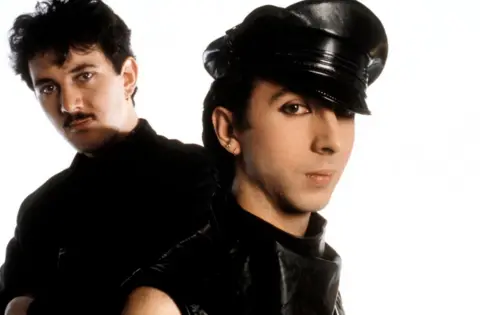
Dave Ball, a key member of the groundbreaking 1980s synth-pop band Soft Cell, has died at the age of 66.
Together with singer Marc Almond, the duo achieved a global success with their cover of Gloria Jones' the classic track Tainted Love in 1984, and their first record Non-Stop Erotic Cabaret is regarded as a classic of electronic music.
He subsequently formed the innovative techno group The Grid, who secured popular acclaim with their 1994 single the hit Swamp Thing.
Ball passed away calmly in his rest at his residence in London on October 22, just weeks after playing a headline show with Soft Cell at the Rewind Festival in the Thames-side town.
Recent Health Challenges
At that show, Ball appeared in a mobility chair, as he had for the last two years, after a spate of health issues.
"I ended up damage myself quite a bit," he commented in 2023. "I broke spinal bones in my back and cracked about multiple ribs and fractured my arm."
Following contracting a lung infection and suffering from sepsis, he was placed in an induced coma and stayed in hospital for seven months.
Nevertheless, he had been in "a great place mentally" over the summer, as he worked on a fresh record with Almond, called Danceteria, which is scheduled for release in the coming year.
"He was concentrated and so happy with the latest project that we literally completed only a few days ago," stated the singer in a tribute.
"It's so sad as 2026 was completely planned to be such an uplifting year for him, and I take some solace from the knowledge that he heard the finished record and believed that it was a great piece of work."
Heartfelt Messages
Almond described his collaborator as "an exceptionally talented musical genius", adding: "He was the heart and soul of Soft Cell and I'm extremely pleased of our legacy.
"Thank you Dave for being an significant part of my existence and for the music you gave me. I couldn't be where I am without you."
His Grid bandmate from The Grid, also paid tribute, remembering Ball's "constant humor" and "steadfast support".
"Forming a partnership with someone is different from joining a band, the bond is very tight," he added.
"That's how it was with us. We experienced so many extraordinary, incredible, memorable moments as a team. Many thanks, Dave."
Early Life
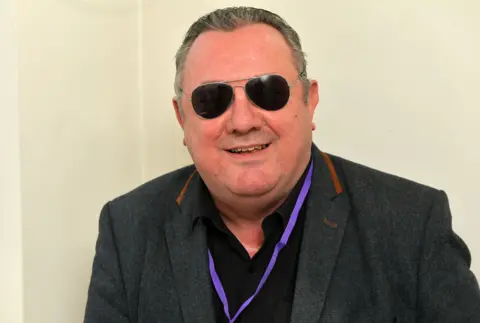
Born into a single-parent household in the city of Chester in the late 50s, Ball was given up for adoption when he was 18 months old.
He grew up in Blackpool with his new family Donald and Brenda Ball, who changed his first name from his birth name to David, alongside his younger sister Susan, who was similarly welcomed.
He encountered Almond at an art college in the late 70s, where they were both learning art. Fuelled by a mutual passion of a music genre, they formed Soft Cell the same year, and promptly recorded an EP.
Creative Collaboration
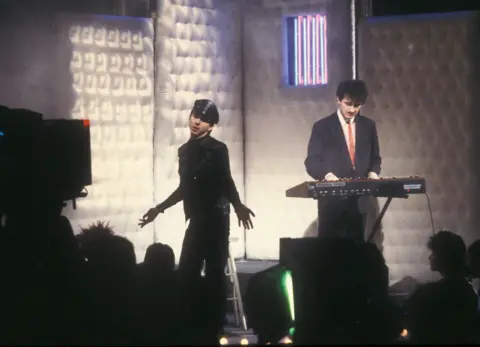
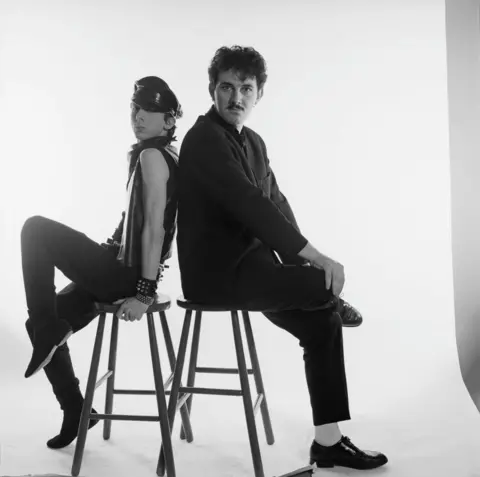
The duo were an distinctive combination: Ball was the quiet musician, bent over his keyboard, while Almond was a flamboyant showman, all sparkle and eye-liner; but they attained a unique musical alchemy.
Ball had cultivated a fascination with electronic instruments after watching the band Kraftwerk appear on a television science show a popular series, and started to marry moody electronic sounds to the catchy tunes Almond was composing.
Tainted Love became the United Kingdom's second biggest-selling single of 1981, shifting 21 million units globally. Alongside hits by Gary Numan, Human League and electronic acts, it helped cleared the way for the electronic music style of the 1980s.
The track was also included on their first album, Non-Stop Erotic Cabaret, which spawned two further high-charting hits: Bedsitter and Say Hello, Wave Goodbye.
They followed the record up with the separate release, Torch, which reached at number two in 1982.
Professional Journey
Success had its benefits. "I loved being able to afford my initial property, having money and travelling, which might seem like a beauty queen," Ball not long ago told with a music magazine.
But it also presented challenges. "Sudden riches allowed we could purchase substances to relieve the monotony" of press appearances and television shows, Ball said.
"I know that's a cliché, but it's a cliché for a valid cause, because it applies for so many musicians."
During the party-filled existence, the pair were also drifting apart, but they managed to produce a follow-up memorable record - the unconventional, tense and fittingly named The Art Of Falling Apart.
They put out another album, 1984's This Last Night In Sodom, before ending the band to focus on individual endeavors.
Almond proceeded to have a prosperous solo career, including the chart-topping single Something's Got A Hold Of My Heart; while Ball formed The Grid, who mixed dance music with ambient pop over a long-lasting partnership.
Later Work and Comebacks
Soft Cell reunited in the early 2000s, releasing the charting album Cruelty Without Beauty.
Following another break, they returned in recent years, issuing the original singles Northern Lights and Guilty (Cos I Say You Are) before performing what was supposed to be a final performance at the O2 Arena on 30 September, that year.
Yet, they remained together, recording their fifth album, Happiness Not Included, during the pandemic restrictions.
Ball lately characterized the band's new album as a homage to the NYC nightlife they frequented while making their first two albums.
He added that his time in hospital had shaped the band's sound.
"I experienced unusual memories when I was in and out of hospital because I was on pain medication," he told a music magazine.
"The new songs are a electronic representation of the sounds in my head from those days.
"Simultaneously, it's about the experiences we got up to in the 1980s."
The final mixes were completed only days before Ball died. It is scheduled for release in the spring of 2026.

